Project Overview
The client is a major local logistics firm in Nigeria providing cross-country refined oil distribution. Frequent breakdowns of their ageing tank trailers kept disrupting fuel transportation operations. After comparing multiple manufacturers, the client visited our factory to verify our capacity for custom tanker design and export execution, and placed an order for 12 units of 45000L tri-axle fuel tanker semi trailers. We delivered customized tank design, manufacturing, full factory inspection and ocean shipment in line with local road conditions and regulatory requirements. The project passed acceptance smoothly. Once put into service, the new trailers greatly improved fleet reliability and supported the client’s compliant oil transport business, laying a solid foundation for long-term strategic cooperation.
Customer Requirements
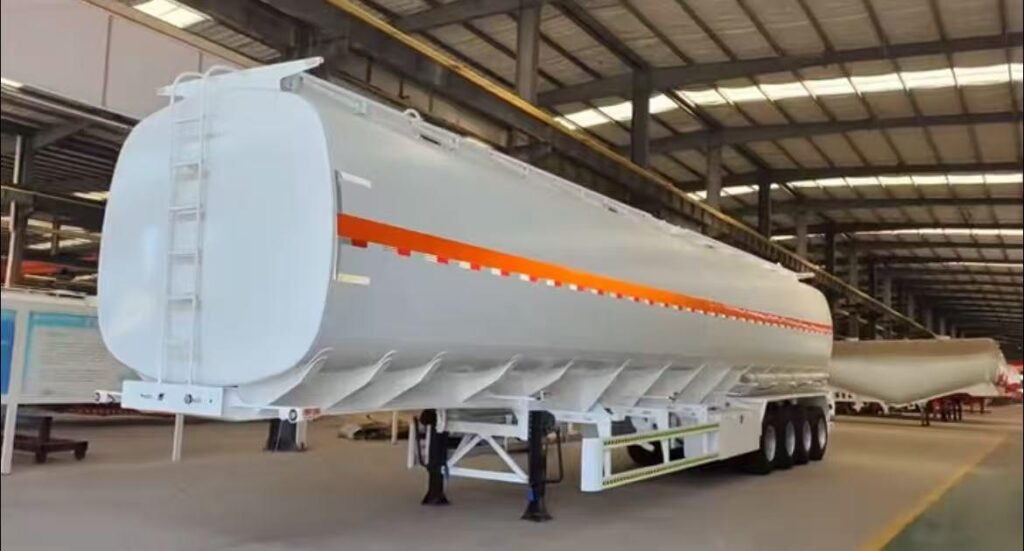
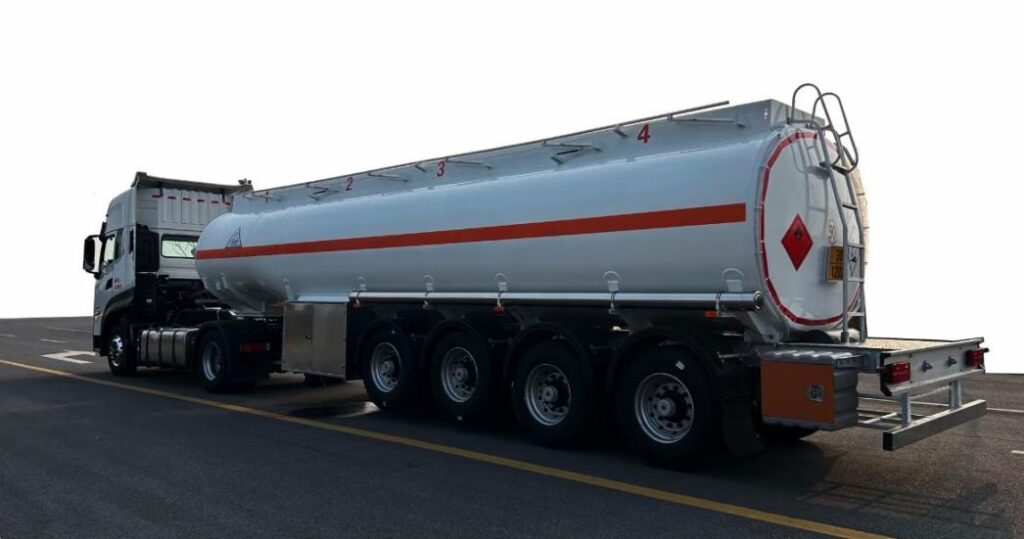
- 45000L tank capacity per unit with multi-compartment design for separate transportation of gasoline and diesel
- Tri-axle heavy-duty chassis built for long-distance travel on bumpy, gravel unpaved inland roads in Nigeria
- Reinforced tank anti-corrosion treatment to resist hot & humid tropical climate and extend trailer service life
- ABS braking system as standard; all electrical components waterproof and dustproof to comply with local road safety regulations
- Full set of material certificates, NDT reports, vehicle drawings and factory test documents for customs clearance
- Total project lead time within 60 days, covering production, QC, loading and ocean shipment
- English operation manual and spare parts list supplied, with remote troubleshooting and technical support
Project Challenges
- Structural risk from liquid sloshing inside tank: Bumpy inland roads in West Africa cause continuous fuel movement that strikes the tank and baffles. Baffles on standard tank trailers lack sufficient strength. Long-term heavy-load operation may trigger fatigue cracking on welds, leading to oil leakage and severe safety risks.
- Rapid component ageing under tropical working conditions: Nigeria has high temperatures all year round with humid rainy seasons and salty dust in the air. Ordinary paint peels and rusts easily. Rubber seals and axle parts degrade and leak rapidly under high heat. Local spare parts supply is limited, resulting in difficult and expensive maintenance.
- Compliance of customs documents & tight lead time: Nigerian customs carry out strict review for documents of pressure-vessel trailers. Non-compliant paperwork will lead to port detention and heavy fines. Meanwhile, the client set a fixed timeline for fleet renewal. Custom fabrication plus multi-stage inspection created tight scheduling and delivery pressure.

Our Solution
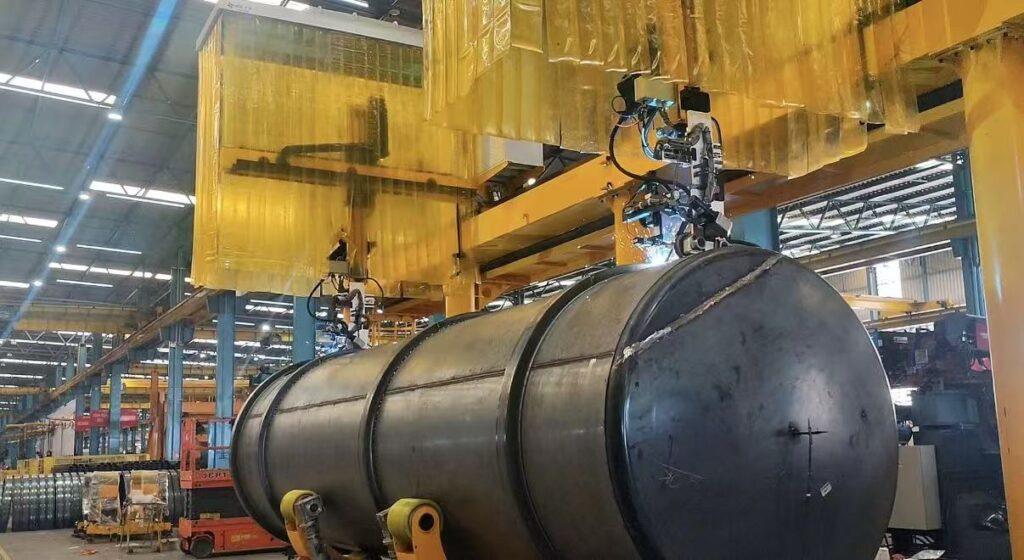
- Solution for liquid sloshing risk: The tank is made of high-strength Q345 steel plate with thickened baffles and reinforcing ribs. Automatic submerged arc welding is adopted for all tank welds with 100% non-destructive testing. Optimized compartment layout distributes liquid impact and reduces tank stress to prevent weld fatigue cracking under continuous bumpy travel.
- Solution for tropical corrosion and ageing: Three-layer anti-corrosion system: sand blasting + electrophoretic primer + weather-resistant topcoat. Heavy-duty reinforced axles and suspension are equipped, and all seals are high-temperature resistant rubber. Waterproof connectors are used for vehicle wiring to boost dust and water resistance and cut component failure rate in hot environments.
- Solution for document compliance & tight schedule: Our documentation officer prepares all export documents from project kick-off to ensure material reports and NDT certificates meet local customs standards. We adopted parallel production workflow for cutting, welding, coating and assembly. QC checks are integrated into every manufacturing stage without extra waiting time to guarantee on-time delivery.
Production & Delivery
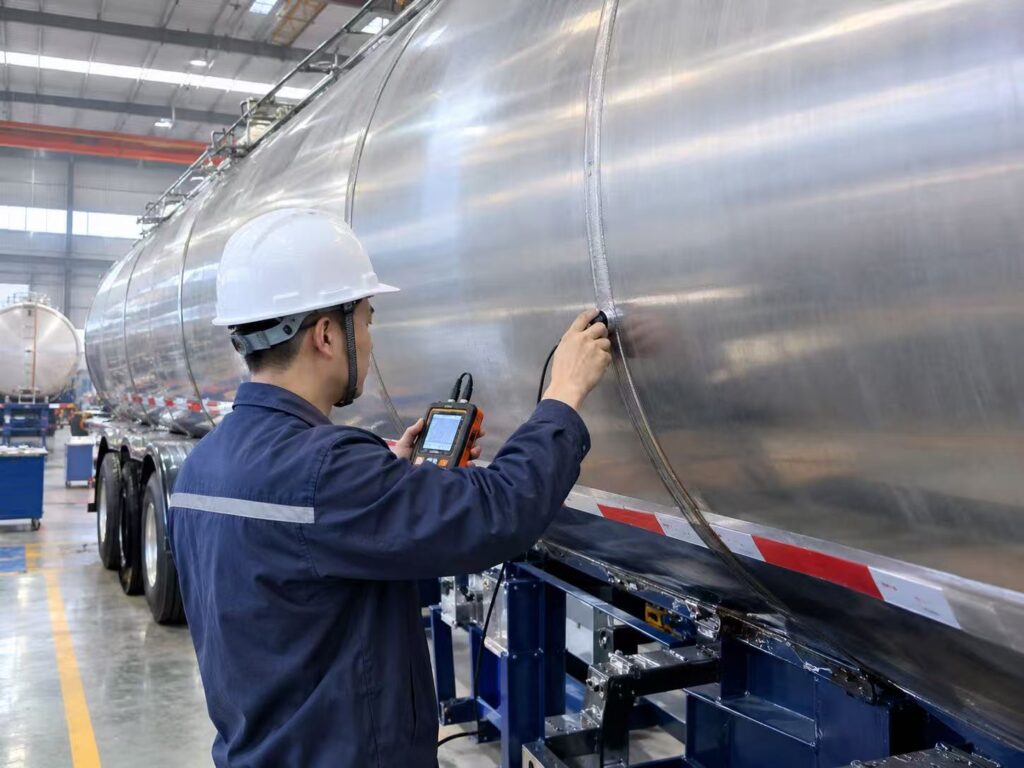
Total production lead time for this project was 58 days. Manufacturing procedures include plate cutting, tank welding, NDT inspection, chassis assembly, anti-corrosion coating, full vehicle assembly, hydrostatic test and overall performance test. After each trailer is assembled, the QC team conducts tank hydrostatic test, brake performance test, sealing and lighting inspection, records all test data and reworks defects immediately. After full acceptance, the trailers were shipped by ro-ro vessel from Qingdao Port to Lagos Port. We took photos before loading, delivered hard and digital copies of all certificates to the client, tracked ocean logistics and updated bill of lading and sailing schedules in real time.

Project Results
All 12 units of 45000L fuel tanker semi trailers were delivered on schedule. The cargo cleared customs smoothly and passed client’s on-site acceptance at the first attempt. After six months of operation, the client reported zero tank leakage or frame deformation and stable braking performance. The failure rate is much lower than their old trailers, single-trailer transport efficiency rose by roughly 25%, and maintenance costs decreased remarkably. The client praised our custom design, rigorous quality control and delivery service. We are now negotiating a repeat order of 8 same-model trailers. The client also referred two local logistics companies for tanker inquiries, helping us expand our presence in Nigeria’s energy transport sector.